
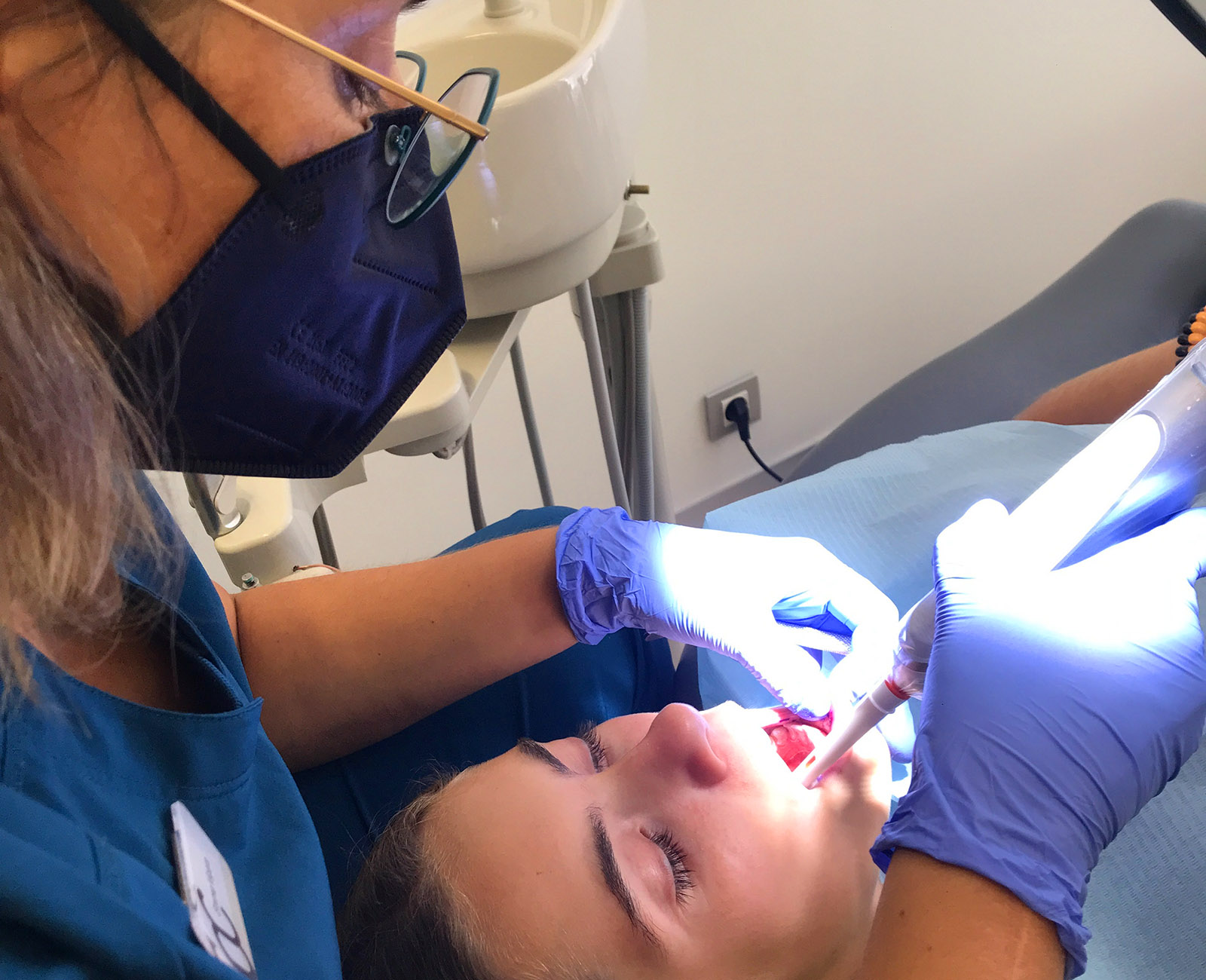
Why are regular check-ups with the dentist so important?
The key to preventing oral problems is constant monitoring. Regular dental checkups are essential to maintaining optimal oral health.
Not only do they allow problems such as cavities, gingivitis or periodontitis to be detected in their early stages, but they also help prevent the development of more serious complications that can affect both the mouth and the rest of the body.
Many oral diseases, such as infections, can go unnoticed in their initial stages, and going to the dentist regularly allows for a timely diagnosis.
Furthermore, periodic check-ups are not only aimed at identifying visible problems, but also allow us to assess more subtle aspects such as dental alignment, wear and tear on the parts or the health of the gums.
Constant monitoring by professionals helps keep your smile in good condition, and prevents minor problems from becoming costly and more complex treatments in the future.
What is checked in a regular dental consultation?
At each dental check-up, we evaluate different aspects of oral health, which can go beyond prophylaxis or caries assessment.
For those who come just to check that everything is still in order, these checkups include a general assessment of the condition of the teeth and gums.
However, in other cases, visits are part of long-term follow-up, for example, to control periodontal disease or review the progress of treatments such as orthodontics, prosthetics or implants.
Apart from what has been mentioned, we can also perform: Control of periodontal diseases: In patients with gum problems, such as gingivitis or periodontitis, the depth of the periodontal pockets is verified through probing and the condition of the bone that holds the teeth is checked.
Assessment of the condition of dental restorations: Fillings, crowns or bridges are checked to ensure that they are in good condition and do not show wear or leaks.
Detection of serious oral diseases: Soft tissues are examined to detect any possible early signs of oral cancer or infections.
This continuous monitoring is vital for people who are following specific treatments, as it allows therapies to be adjusted and adapted based on the patient’s progress.
Prevention of serious diseases through check-ups Going to the dentist regularly not only helps prevent common problems such as cavities, but also plays a crucial role in the early detection of more serious diseases.
Among these, oral cancer is one of the most dangerous conditions that can be diagnosed during a routine check-up.
Its early detection significantly increases the chances of successful treatment and the reduction of sequelae.
In addition, conditions such as periodontitis, which affects the bone and gums, can trigger systemic problems if not treated properly in time, linking them to cardiovascular diseases (heart attacks or strokes) and diabetes.
The importance of continued maintenance Dental care does not end with professional hygiene or one-off treatment.
A program of ongoing check-ups ensures that teeth and gums remain healthy in the long term.
This allows constant monitoring of oral hygiene and ensures that any changes in oral health are detected quickly.
Regular visits not only correct possible problems, but also motivate patients to maintain good hygiene habits, reinforcing appropriate practices such as brushing and flossing.
Regular check-ups at the dentist are an investment in general health and the prevention of future oral problems.
It’s not just about maintaining a beautiful smile, but about ensuring a healthy mouth that doesn’t affect other parts of the body.
With early detection, treatments are simpler and less expensive, ensuring that any complications can be treated in a timely and effective manner.