
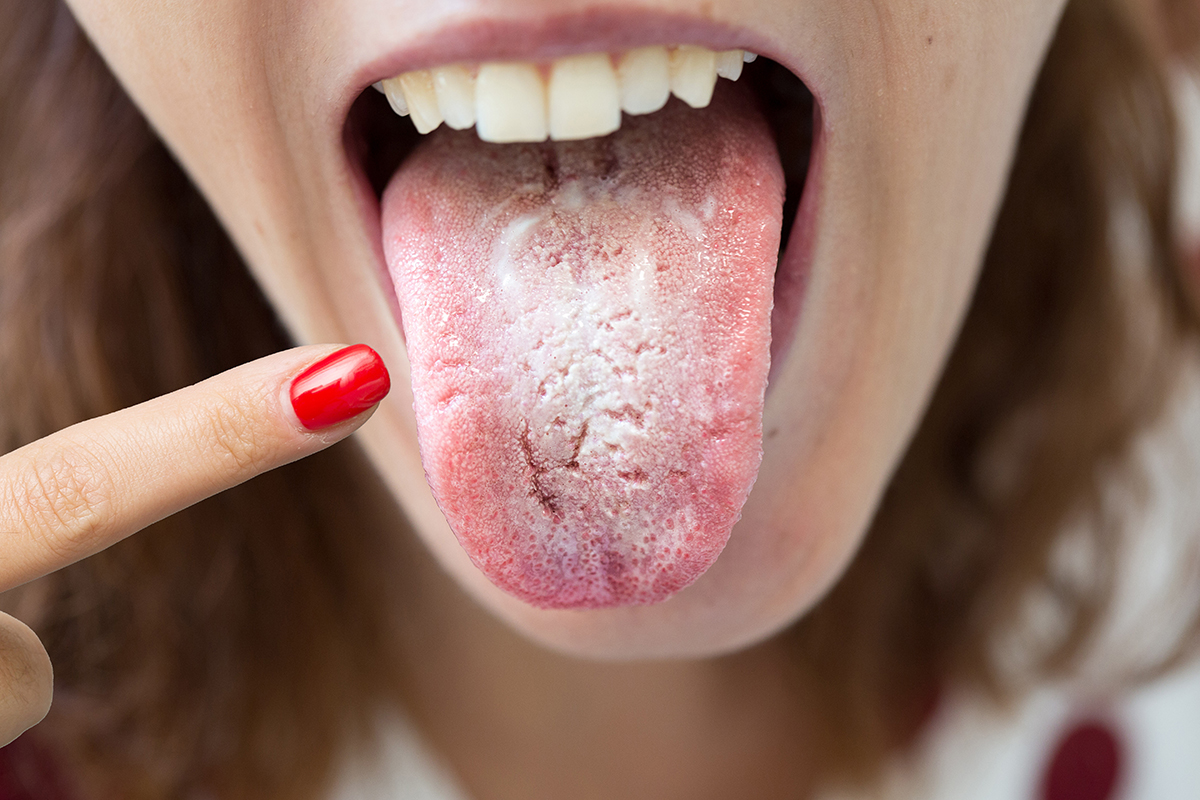
A common sign that can have multiple causes (and solutions) Noticing a whitish layer on the tongue—what in medical terms is known as a coated tongue—is more common than it seems.
Sometimes it appears temporarily and without consequences; at other times, it may indicate that something is wrong with your oral or general health.
At Clínica Cervera we explain why this phenomenon occurs, when it is normal, when you need to pay attention to it and what you can do to maintain a healthy tongue.
What is white or coated tongue?
White tongue is a condition in which the surface of the tongue appears covered by a whitish or yellowish layer, usually formed by food debris, dead cells and bacteria accumulated between the taste buds.
This coating may be due to insufficient oral hygiene, but also to other factors such as dehydration, dry mouth, fever, tobacco use or use of certain medications.
In most cases, this is a benign and temporary problem, although on some occasions it can reflect a more complex condition.
Most common causes
The most common causes of white tongue include:
- Lack of oral hygiene, especially if the tongue is not cleaned while brushing.
- Decreased salivary flow, which favors the accumulation of bacteria.
- Tobacco, which dries out the mouth and alters the oral flora.
- Fever or respiratory infections, which modify the bacterial balance.
- Consumption of certain medications, such as antibiotics or antidepressants.
- Digestive problems, such as gastric reflux or stomach upset.
In rarer cases, a persistent white tongue may be related to fungal infections (such as oral candidiasis), leukoplakia, or systemic diseases.
That’s why it’s important to observe if it’s accompanied by other symptoms such as burning, discomfort, cracks or constant bad breath.
When should I consult a dentist?
Although a coated tongue is usually temporary and of little concern, it is advisable to consult a dentist if:
- The white layer does not disappear after several days, even with good oral hygiene.
- Symptoms such as pain, burning, constant bad breath or altered taste appear.
- You are an immunocompromised person or are undergoing long-term antibiotic treatment.
The professional will be able to rule out infections, identify the origin of the problem and recommend the most appropriate treatment in each case.
How to prevent or eliminate white tongue The best way to prevent white tongue is to maintain complete and constant oral hygiene, without forgetting the tongue.
Some practical advice
- Brush your tongue every day, with a soft brush or tongue cleaner, from the back to the front.
- Stay well hydrated, especially if you take medication that dries out your mouth.
- Avoid tobacco and alcohol, as they alter the oral flora.
- Don’t forget interdental cleaning and regular visits to the dentist.
- Follow a balanced diet to avoid nutritional deficits that affect the oral mucosa.
White tongue is a sign that does not always indicate a serious problem but that does deserve attention if it persists or is accompanied by other symptoms.
In many cases, a good oral hygiene routine is the best solution.
And if you have any doubts or notice any discomfort, at Clínica Cervera we are by your side to help you take care of your oral health.