
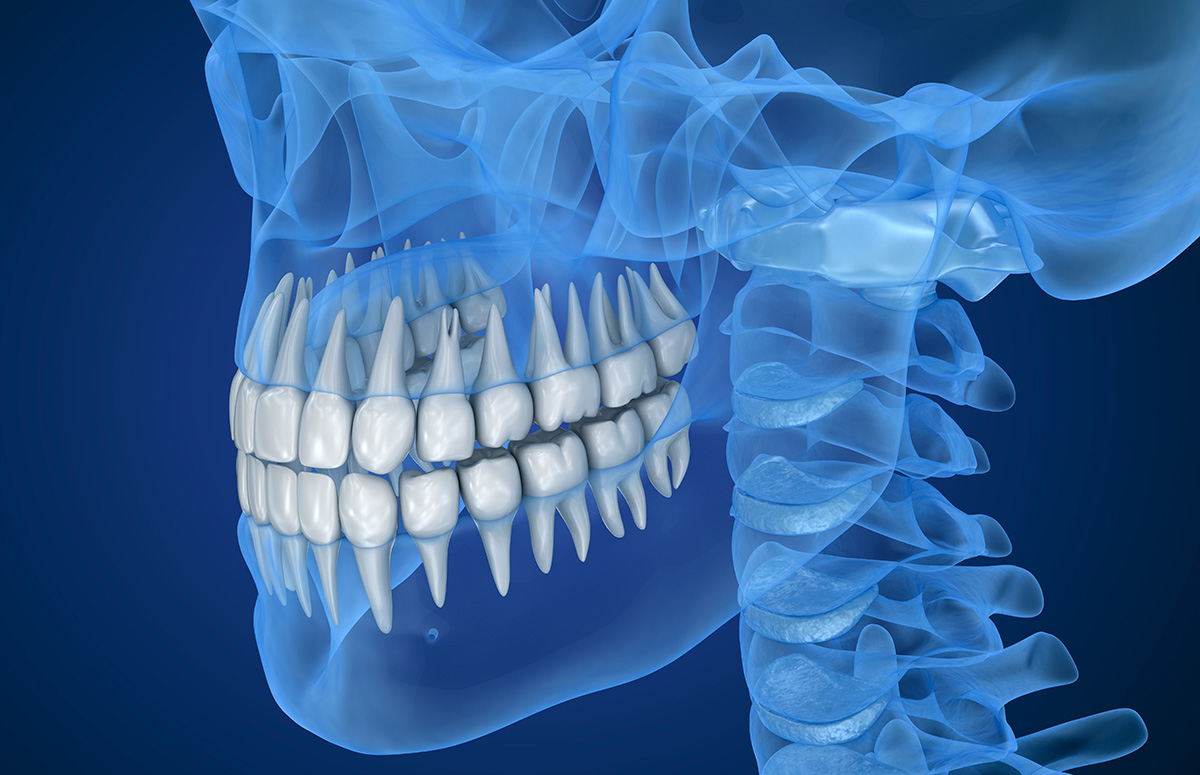
What are teeth made of?
A preview: they are not bones Teeth are complex and essential structures in our daily lives, not only for chewing food, but also for phonation and aesthetics.
Contrary to popular belief, teeth are not bones, but unique structures formed by different layers of tissues, each with specific properties and functions.
What is a tooth?
A tooth is much more than a simple tool for chewing.
It is a complex anatomical organ, designed to perform multiple essential functions in daily life.
Each tooth is strategically located in the oral cavity and plays a specific role in the process of chewing, speech and facial aesthetics.
Crown: The visible part of the tooth, usually above the gum line.
The shape and size of the crown vary depending on the type of tooth, adapting to its specific function in chewing.
Root: The portion of the tooth that extends into the jawbone, providing the anchorage necessary to withstand the forces of chewing.
The quantity and shape of the roots varies depending on the type of tooth.
Neck of the tooth: It is the transition area between the crown and the root, located on the edge of the gum.
This area is particularly susceptible to periodontal disease and cavities.
Each tooth is located in a dental alveolus in the maxillary bones, thus remaining attached to the bone structure through the periodontal ligament.
This complicated design allows each tooth to perform its function efficiently.
Different layers and functions of teeth Teeth are composed of several layers, each with a specific function: Dental enamel: It is the outermost and hardest layer of the human body, composed mainly of hydroxyapatite.
It protects the tooth from pathogens and wear.
Dentin: Located below the enamel, it is a hard tissue similar to bone.
It contains microscopic ducts that connect to the dental pulp and is responsible for the color of the teeth.
Dental pulp: It is the internal soft tissue that contains blood vessels and nerves, crucial for the nutrition and sensitivity of the tooth.
Dental cementum: Covers the root of the tooth and helps hold it to the jawbone through the periodontal ligament.
Types of teeth Humans have two sets of teeth throughout their lives: baby teeth and permanent teeth.
Each type of tooth has a specific function: Incisors: Located in the front, they are sharp and used to cut food.
Canines: Known as fangs, they are pointed and used to tear food.
Premolars: Located between the canines and molars, they have a chewing surface with two tips and are used to grind and crush food.
Molars: Located at the back of the mouth, they are mainly responsible for grinding food thanks to their large occlusal surface.
Each tooth plays a crucial role in chewing, contributing to efficient digestion and overall health.
And also, teeth are fundamental in phonation and facial aesthetics, influencing our appearance and the way we pronounce words.
In summary, teeth are complex and multifunctional structures, their health and maintenance are essential for our overall well-being.
Proper care, including rigorous oral hygiene and regular visits to the dentist, is key to preserving its function and appearance throughout life.