
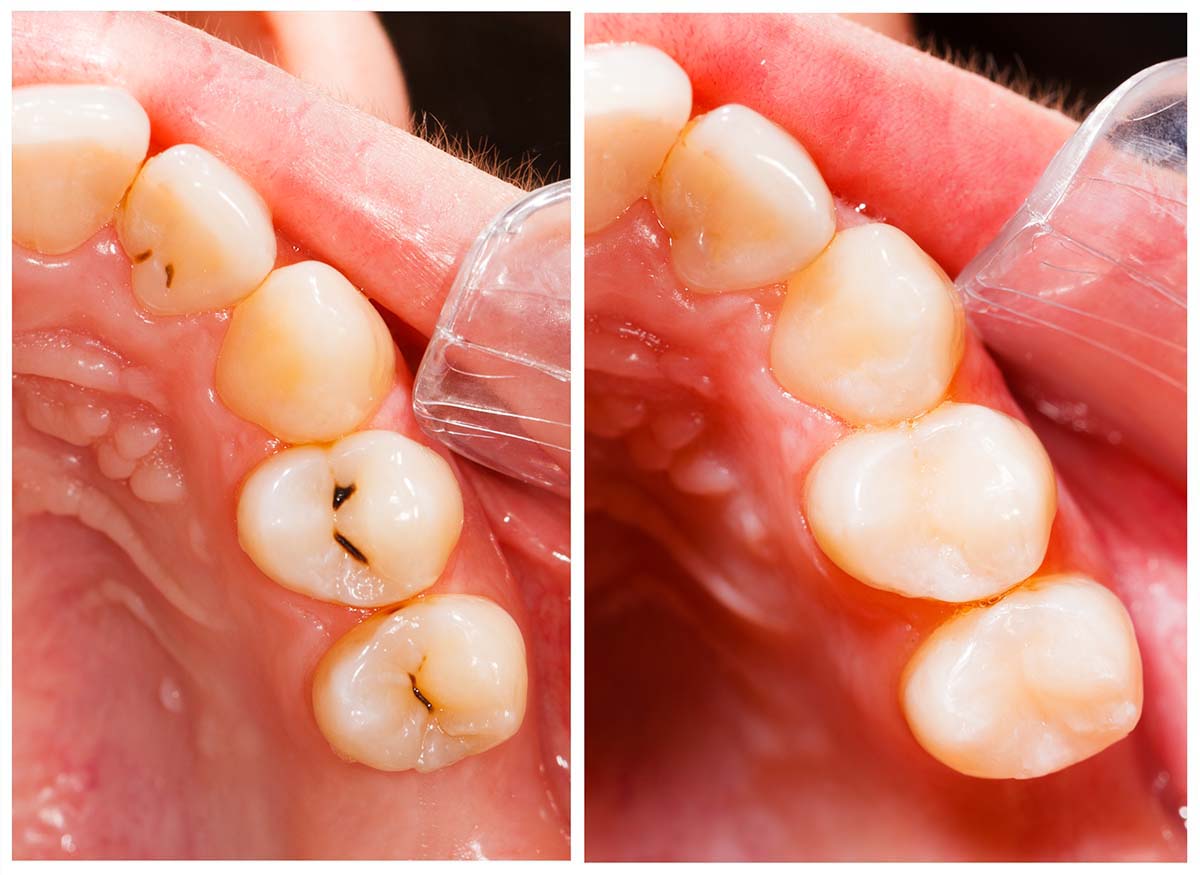
What do dental fillings consist of?
They are not only used for cavities. Dental fillings are one of the most common treatments in dentistry and represent an effective solution for treating cavities and preventing significant damage to teeth.
Knowing in depth what they are or when they are necessary allows you to learn more about how we take care of your oral health.
When is the use of dental fillings necessary and when not?
Dental caries is a condition that degrades the hard tissue of the tooth.
If left untreated, it can progress and cause discomfort, pain or even tooth loss.
This is where dental fillings play their role: Necessary: When caries is detected at an initial or moderate stage.
If the tooth has wear due to acid erosion or bruxism.
To repair broken or cracked teeth.
Not necessary: Caries in a very early stage that can be reversed with fluoride and has not damaged the structure of the tooth.
Teeth that have superficial stains without enamel demineralization.
Not all fillings are the same.
There are several types. The choice of the type of filling will depend on the location and extent of the decay, the preference of the dentist and that of the patient.
Let’s know the most common ones: Amalgam: This is a mixture of mercury with other metals.
It is resistant and durable, although its silver color is not aesthetic due to visible teeth.
Currently it is used less and less due to regulatory reasons regarding the use of products containing mercury.
Composite resins: They are composed of ceramic particles mixed with a synthetic material that imitates the composition of the tooth.
They are popular for their ability to mimic the natural color of the tooth.
Glass ionomers: These fillings release fluoride, which can help prevent further decay.
They are less resistant than other types, so they are mainly used on teeth that cannot withstand intense chewing.
Porcelain or ceramic: These fillings, also called inlays, are manufactured in a laboratory and then cemented to the tooth.
They have great aesthetics and durability.
What you need to know about dental fillings Durability.
While fillings are designed to be durable, they are not permanent.
Its useful life may vary depending on the material and the patient’s habits.
Sensitivity.
It is normal to feel some sensitivity after receiving a filling, but this should decrease over time.
Care.
Even if the tooth is filled, it is essential to follow proper oral hygiene.
This includes brushing, flossing, and regular visits to the dentist.
Reviews.
It is important to check the fillings both clinically and radiologically, and to do so regularly to ensure that they are not worn or cracked.
In short, dental fillings are a very good tool to protect and restore the health of your teeth.
If you suspect you may need one, don’t hesitate to consult your dentist to receive the best possible treatment.