
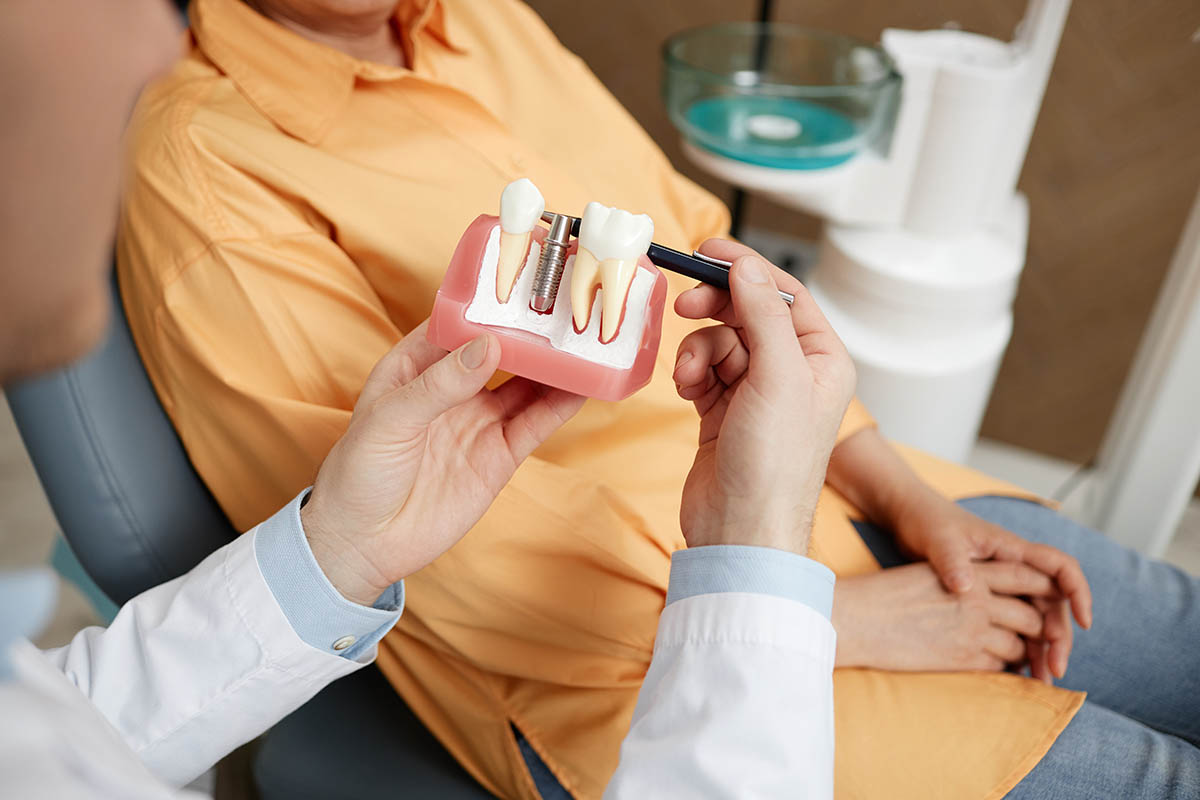
We explain how to protect yourself so that they accompany you for many years. Dental implants are an excellent solution to recover your smile and chewing function, but their long-term success depends largely on the care we take of them.
Although they do not suffer from cavities like natural teeth, they can be affected by infections if good hygiene is not maintained.
Over time, the bacteria present in the mouth can accumulate around the implant and cause problems such as mucositis or peri-implantitis.
The latter, if not treated in time, could put the stability of the implant and the health of the bone surrounding it at risk.
What risks exist if they are not taken good care of?
One of the most common problems is peri-implantitis, an inflammation of the tissues surrounding the implant caused by bacteria accumulated in the mouth.
If not detected in time, it can compromise the stability of the implant and even cause its loss.
It is a silent disease, which often does not manifest itself until it is already advanced.
The risk increases if other factors exist such as smoking, poor hygiene or systemic diseases such as diabetes.
Therefore, prevention is the best tool to protect your oral health and the durability of your implants.
Keys to good maintenance Maintaining a daily care routine and attending regular check-ups with the dentist are the fundamental pillars.
Here are some key recommendations: Daily brushing: after each meal, with a soft-bristled or electric toothbrush, it is important to reach the base of the implant well.
Interdental hygiene: use interproximal brushes, specific dental floss for implants or oral irrigators to remove food debris between the pieces.
Avoid tobacco: smoking hinders healing and promotes the appearance of infections.
Periodic reviews: at least once a year, to detect any signs of inflammation or changes in the implant.
Specific professional hygiene: not all dental hygiene is the same.
In patients with implants, techniques and tools designed to avoid damaging the surfaces and effectively remove plaque are used.
Listening to your body is also important. Slight bleeding, a red area or discomfort when chewing can be warning signs and should not be ignored.
Consulting with a professional as soon as possible can make the difference between simple treatment and a more complex intervention.
Implants are an investment in quality of life.
Taking care of them is taking care of yourself.
And in this sense, having a trusted team to accompany you is essential.
At Clínica Cervera we help you maintain your oral health in the best conditions, also when you have implants.